Most dishwasher problems trace back to a short list of usual suspects: a clogged filter, a tired door gasket, a jammed spray arm, or a drain path that’s partway blocked. This guide sorts common failures by symptom, so you can jump straight to the section that matches what your machine is actually doing instead of guessing from a list of generic tips.
Every symptom page below ranks causes by how often they turn out to be the real problem, includes at least one test you can run without buying anything, and tells you plainly when a fix is a 10-minute job versus when it’s time to call a professional. Where a fix genuinely varies by manufacturer, we say so instead of pretending one procedure covers every brand.
Dishwasher Won’t Drain
Standing water at the bottom of the tub after a cycle is the single most common dishwasher complaint, and in most cases it’s a clogged filter or a kinked drain hose rather than a failed pump. Start with Dishwasher Not Draining: Causes Ranked by Likelihood for the full diagnostic order. If you’ve already ruled out the filter and the air gap and water is still sitting there, the more specific Dishwasher Not Draining But No Blockage guide picks up from there and focuses on the drain pump and control board.
Dishwasher Not Cleaning Dishes Properly
Cloudy glasses, gritty plates, or food residue baked onto dishes almost always point to a spray arm that isn’t spinning freely, hard water buildup, or a loading habit that’s blocking the water path. See Dishwasher Not Cleaning Dishes: Why and How to Fix It for the full breakdown, including the water temperature and detergent checks most people skip.
Dishwasher Leaking
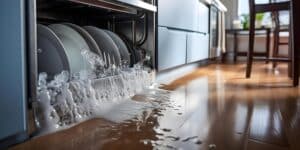
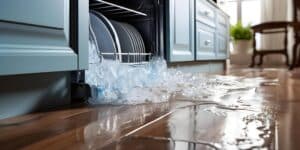
Water on the kitchen floor is urgent because it’s both a slip hazard and a shock risk near outlets. Where the puddle forms (under the door, under the unit, or at the back) tells you almost everything you need to know before you open a panel. Full walkthrough: Dishwasher Leaking: Find the Source Before You Call a Pro.
Dishwasher Smells Bad
A sour or rotten-egg smell is almost never a sign of a broken part. It’s trapped food debris and standing water somewhere the spray can’t reach, usually the filter or the door gasket. It’s also one of the few problems you can usually solve for free. Details: Dishwasher Smells: Where the Odor Is Actually Coming From.
Not starting, unresponsive buttons, and a door that won’t latch are next on our list and will be added to this guide shortly. Dishwasher error codes vary a lot by brand. Whirlpool models show a range of F-codes: F1 (temperature sensor), F2 (leak detected), F3 (won’t heat water), F4 (drain fault), and F8E4 (float switch). GE shows H2O (no water detected), Bosch shows E15 (leak detected), Samsung shows LE (leakage error), LG shows AE or E1 (leak detected), KitchenAid shows F8E4 (water under the unit), and Frigidaire shows PF (loss of power).
Preventive Maintenance
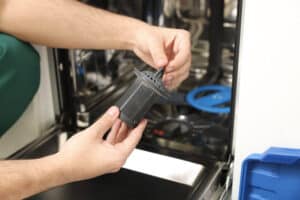
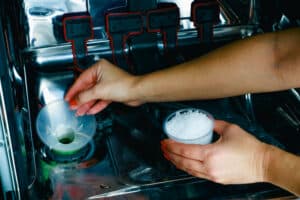
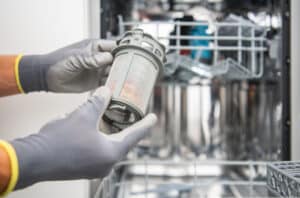
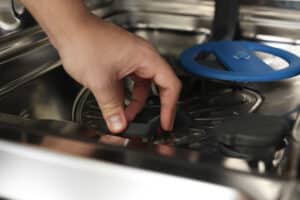
Most of the failures above are slow to develop and easy to head off. Pull the lower filter assembly and rinse it under the tap once a month. This alone prevents a large share of drainage and odor complaints. Spin each spray arm by hand to confirm it moves freely and check its jets for debris. Keep the rinse aid reservoir filled, since rinse aid is what keeps water from beading and drying into spots and film. Run a monthly empty cycle with a dishwasher-safe cleaner or a cup of white vinegar on the top rack to clear grease film from the tub and hoses. Our drain pump testing and replacement guide covers the one component that isn’t part of routine cleaning but is worth understanding before it fails.
Repair or Replace?
As a rule of thumb, if your dishwasher is under 8 years old and the repair costs less than half of what a comparable new mid-range unit would cost (roughly $300–$600 as of 2026), repairing almost always wins. Most individual part replacements, including a drain pump or a door gasket, run well under that threshold in parts and a couple of hours of labor. Past the 10-year mark, or after a second major repair in two years, a replacement usually makes more financial sense, especially since newer units are meaningfully more water- and energy-efficient. Each symptom page above includes a repair-or-replace section with cost ranges specific to that failure. For the full cost breakdown by failure type, see our dishwasher repair cost guide.
When to Call a Professional
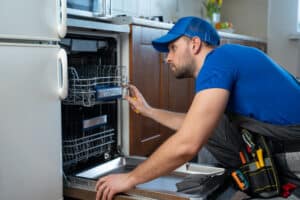
Call a qualified appliance technician if the fix involves the household electrical circuit or wiring beyond unplugging the unit, if you smell burning or see scorch marks anywhere near the control board, if a leak keeps returning after you’ve addressed the obvious sources, or if you’re simply not comfortable working under a machine that’s plumbed into both water and electricity. None of the diagnostics on this site are a substitute for a professional opinion when something feels genuinely wrong.
Frequently Asked Questions
How long should a dishwasher last?
Most dishwashers last 9 to 12 years with basic maintenance. Cheaper units and homes with hard, untreated water tend to land at the lower end of that range.
Why does my dishwasher run so long?
A normal cycle runs 90 minutes to 3 hours depending on the soil level selected; sensor-equipped machines extend the cycle automatically when they detect heavily soiled water, which is normal, not a fault.
Is it normal for a dishwasher to have some water in the bottom?
A small amount of water pooled around the drain area (roughly a cup) is normal and keeps the pump seal from drying out. Standing water covering the bottom of the tub is not.
Can I run my dishwasher with a cracked or worn door gasket?
You can, but a compromised gasket will leak, so it's worth replacing as soon as you notice cracking, tearing, or a section that's stopped springing back into shape.
Do I need to rinse dishes before loading them?
Modern dishwashers and detergents are designed to handle food residue, and pre-rinsing wastes water without meaningfully improving results. Scraping off large scraps is enough.
The information provided here is a diagnostic aid and does not replace the intervention of a qualified professional.