On most Whirlpool washing machines, a clogged pump filter or trap is the most common cause of standing water. Front-load and some newer top-load models have a filter door at the bottom front; older direct-drive top-loaders often don’t, and need the machine tipped back to reach the pump.
Consider this a companion piece to our full Washing Machine Not Draining guide, which walks through the general causes in diagnostic order — everything from here on narrows in on Whirlpool’s own reset steps, part locations, and error codes. You’ll also find it filed under our broader washing machine troubleshooting hub.
Whirlpool Reset Procedure
Unplug the machine for 1 minute, or on models with a Power button, hold it for 3 seconds to power-cycle the control board. Some older Whirlpool and Kenmore-built top-loaders (Whirlpool manufactures many Kenmore washers) respond to opening and closing the lid six times within 12 seconds, which resets the control without a full power cycle. The exact method varies by generation, so check your model’s use and care guide if a simple unplug doesn’t clear the fault.
Where the Filter and Pump Are on Whirlpool Washers
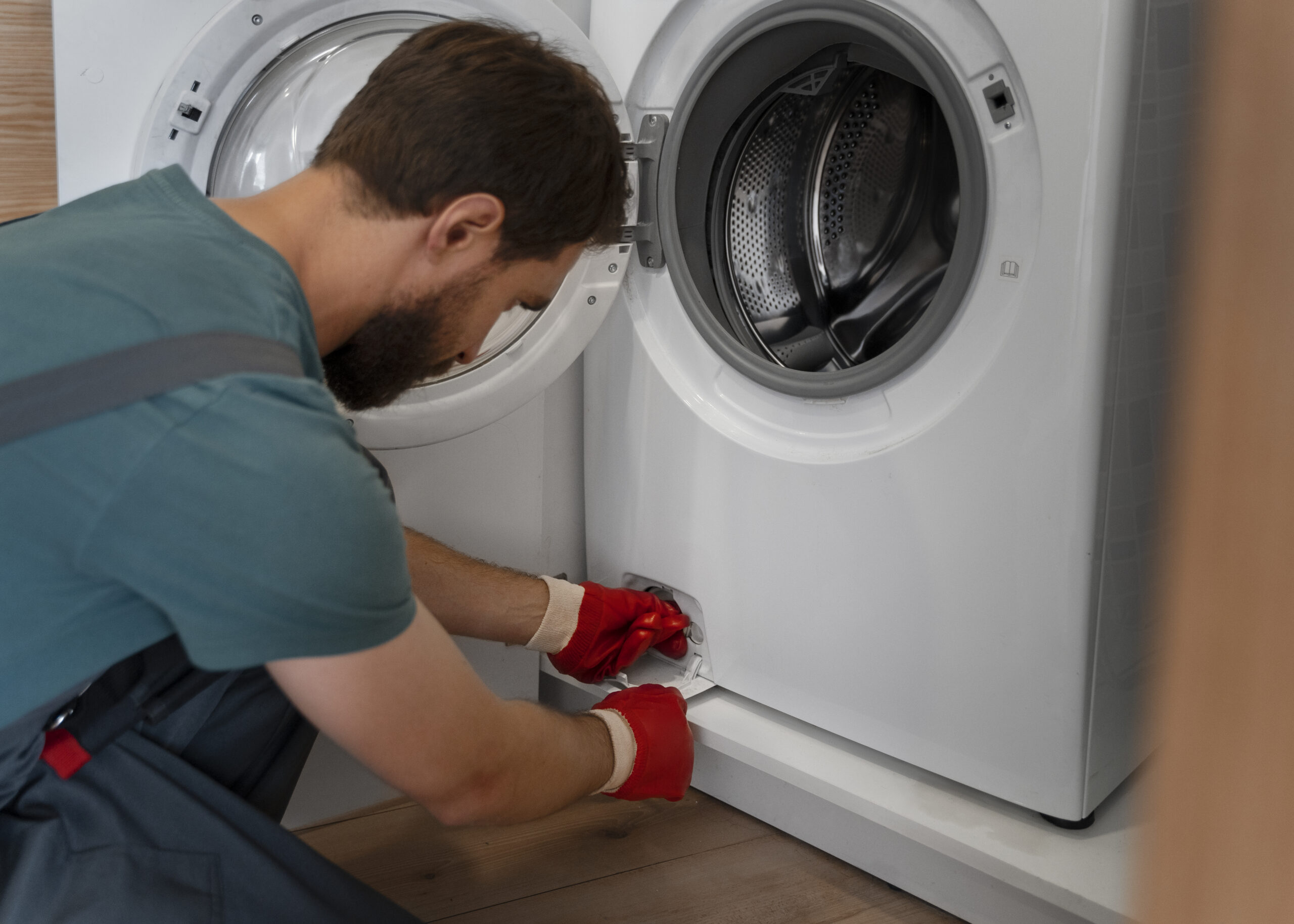
Front-load Whirlpool machines, and the Maytag models Whirlpool builds on the same platform, have a coin trap and filter behind a small hinged door at the bottom front, directly ahead of the pump housing. Many direct-drive top-load Whirlpool and Kenmore washers have no user-accessible filter at all. On those, the pump sits underneath the cabinet, and reaching it means tipping the machine onto its back or front, a job that’s more involved than the five-minute filter check on a front-loader.
Error Codes You Might See
F02 shows up on a number of Whirlpool electronic models when the control detects the drain is taking too long, though the same code appears on some lines for a long fill instead, so treat it as a general timing fault rather than a specific part diagnosis. “Sud” or “Sd” points to excessive suds, which can trigger extended draining and pauses that look like a drain failure even when the pump is fine. Codes and their exact meaning vary by model year: always check the code against your specific use and care guide before ordering a part.
What Whirlpool Owners Run Into Most
The lack of a user-accessible filter on many direct-drive top-load models is the most common complaint: a small object that would take five minutes to remove on a front-loader instead means tipping the machine and removing a bottom panel. On front-load models, the coin trap door is small and can be stiff to open on older units. Keep a shallow pan handy, since water runs out as soon as you crack it open.
Frequently Asked Questions
Does every Whirlpool washer have a lint filter?
No. Many direct-drive top-load models don't have a user-accessible filter at all; only front-load and some newer top-load models do.
Where exactly is the coin trap on a Whirlpool front-loader?
Behind a small hinged panel at the bottom front of the machine, usually in the left or right corner. Check your model's quick-start guide for the exact side.
Is F02 always the drain pump?
No. It indicates the control detected a timing fault during drain or fill, and can be triggered by a clogged filter, a kinked hose, or excess suds just as often as a failed pump.
Do I need a Whirlpool-specific replacement pump?
Buy a pump matched to your exact model number rather than just the brand, since pump specs vary even within the same product line.
This page is meant to help you narrow down the cause before you call anyone — it’s not a substitute for hands-on diagnosis by a licensed appliance technician.