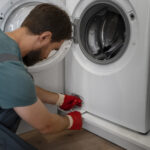
The most common cause of a washing machine that won’t drain is a clogged pump filter, not a failed motor. Before assuming you need a replacement part, work through the checks below in order. They’re ranked from most to least likely based on how these cases typically resolve.
This page sits within our broader washing machine troubleshooting guide. If draining isn’t the issue but the machine won’t spin afterward, our not spinning guide is the better fit — the two problems overlap in cause but aren’t identical.
Quick Diagnosis Table
| Cause | Likelihood | Difficulty | Typical Part Cost |
|---|---|---|---|
| Clogged pump filter | Very likely | Easy (no tools) | $0 — cleaning only |
| Kinked or clogged drain hose | Likely | Easy | $10–20 if replaced |
| Small item jammed in the pump | Likely | Easy to moderate | $0–15 |
| Door lock or lid switch not confirming closed | Possible | Easy | $15–40 if replaced |
| Blocked external standpipe or drain | Possible | Easy | $0 |
| Worn-out drain pump motor | Rare | Moderate | $30–90 |
| Faulty control board | Rare | Professional recommended | $100–250+ |
Repair or Replace?
Every cause on this page except a failed control board costs well under $90 in parts and under an hour of your time, so repairing is the clear choice. A control board runs $100–$250 in parts plus labor if you hire it out; on a machine older than 10 years, that’s usually the point where a new washing machine makes more financial sense than a third repair.
Whirlpool, GE, Samsung, LG, Maytag, Kenmore, Electrolux, and Bosch all place the pump filter and drain hose slightly differently, and reset procedures vary by model. Brand-specific guides are available for Whirlpool, GE, Samsung, and LG washers, covering the reset procedure, exact filter and pump location, and the error codes specific to each brand. If your machine shows a code, see Bosch E18 or Frigidaire E2.
If your machine drains fine but leaves a musty smell behind, that’s a different issue. See our Washing Machine Smells guide.
Frequently Asked Questions
Why is there a little water left in the drum even after a completed cycle?
A small amount of water pooled around the drain area or in the door gasket fold is normal on many models and keeps the pump seal from drying out. Water covering the bottom of the drum is not.
Can I run another cycle to try to clear a washing machine that won't drain?
Not until you've cleared the clog. Running another cycle on standing water just adds more weight on top of the blockage and can trigger the machine's overflow protection.
I just installed a new washing machine and it won't drain at all. What should I check first?
Check that the drain hose is inserted correctly into the standpipe and not pushed in so far that it's kinked, and confirm any shipping locks or transit bolts were removed during installation.
How can I check the drain pump without a multimeter?
You can't confirm a failed motor without one, but you can rule out a jam by checking whether the pump's impeller, visible once the filter is removed, spins freely by hand.
Is a loud humming sound during the drain cycle normal?
A brief hum is normal. A grinding or rattling sound usually means something rigid, like a coin or a bra underwire, is caught in the pump.
Think of this as a way to narrow things down before calling anyone, not a substitute for a qualified technician’s hands-on assessment.