A washing machine making loud noise when spinning is, most of the time, reacting to something outside its own mechanics: laundry bunched on one side of the drum, feet that don’t sit flat, a hose or a broom knocking the cabinet, or shipping bolts nobody removed. Those checks are free and take minutes. The noise that matters is a grind, rumble, or roar that stays when the drum is empty and gets louder as the spin speeds up. That one points to the drum bearings or the suspension, and it goes to a technician.
This page sorts a loud washer by the sound it makes and the part of the cycle where you hear it. If your complaint is less a noise than a cabinet that shakes or walks across the floor, the washing machine shaking page goes deeper on load balance and leveling. Every other symptom is in the washing machine troubleshooting guide.
What a loud washer is telling you, sound by sound
| Cause | Likelihood | Difficulty | What to do |
|---|---|---|---|
| Load bunched on one side, or drum overfilled (thump or bang in the spin) | Very likely | Easy (no tools) | Pause, spread the laundry around the drum, wash a single bulky item with a few towels |
| Washer not level, or one foot off the floor (rattle, rocking) | Very likely | Easy (no tools) | Push on the cabinet from each side and adjust the legs until it stops rocking |
| Hoses or household items knocking the cabinet (knock or rattle at high spin) | Likely | Easy (no tools) | Secure the drain and inlet hoses, move anything leaning on the washer |
| Coin, key, or wire loose in the drum (click or scrape on every turn) | Likely | Easy (no tools) | Unplug, empty the drum, turn it by hand and look along its edges |
| Shipping bolts still in place on a new or moved front loader (violent banging from the first load) | Possible | Moderate | Check the rear panel against the installation instructions before running another load |
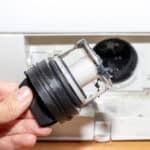
| Clogged drain pump filter on a front loader (rattle or loud hum while draining) | Possible | Moderate | Unplug, then clean the filter the way the manual describes |
| Worn drum bearings, shock absorbers, suspension rods, or motor bearings (grind, rumble, clang, whine) | Possible | Professional required | Stop using the washer and book service |
Bangs, thumps, and rattles in the spin cycle: start outside the machine
Press pause and look at the load before anything else. LG’s support page puts it plainly: laundry stuck to one side of the tub makes a pounding or rattling noise in the spin, and rugs, blankets, mats, and waterproof fabrics are the items most likely to leave the tub lopsided. Spread the load around the drum and restart. LG also suggests filling the tub to about two thirds of its capacity so the laundry can move freely. Maytag has a tip for the opposite problem, one heavy, absorbent item washed alone: add a few towels to balance the drum.
If the load was fine, check the floor. LG’s test is to push the washer forward, backward, and sideways; if it shakes, adjust the legs until it doesn’t. Maytag describes the sound of an unlevel washer as a rattle or a vibration, which is a useful clue when you are trying to tell it from a bang. Whirlpool’s page for top loaders names a cause few people think of, a drain pan under the washer. With heavy or bulky loads the bottom of the tub can rub against the pan, and Whirlpool’s fix is to extend the leveling legs so the tub clears it.
Then look at what touches the cabinet. Whirlpool says the drain hose and the water inlet hoses can knock against the back of the washer as water pushes through them, and recommends securing them with the beaded strap supplied with some models or with a wire tie. The same page lists brooms, dustpans, drying racks, and hangers leaning on the washer as a source of rattling at high spin speeds. Maytag mentions the pedestal drawer under a front loader for the same reason: whatever is stored in it vibrates along with the machine.
A washer that has banged violently since its very first load, or since a move, is a separate case. Front loaders ship with bolts that lock the drum. Whirlpool’s page says all four shipping bolts and their plastic spacers must come out before the washer runs, and that leaving them in causes noise, vibration, or error codes. LG gives a quick way to tell: open the door and try to shake the drum by hand. A drum with no wobble at all is still bolted. The number and position of the bolts depend on the model, so follow the installation instructions for yours.
A click or scrape that repeats with each turn of the drum usually means something escaped from a pocket. Unplug the washer, empty it, and turn the drum by hand while you look along its edges for a coin, a key, or a bra wire. LG is blunt about what comes next: if the noise continues with the drum empty, the washer needs repair service.
Washing machine making a grinding noise: normal gears or worn bearings?
Some grinding is the machine doing its job. Whirlpool’s product help says a grinding or rubbing noise during agitation or spin is typically the motor changing direction and the gears working, and calls it part of normal operation on its top loaders. Maytag says the same about the clunk you hear when the washer shifts from agitation to spin. Both get louder when the washer is overloaded or not level, which is why the checks above come first.
A scrape or grind that sounds like metal on metal is different. Maytag reads it as metal parts rubbing together and recommends a professional. On an older washer, it ties loud banging or clanging in the spin to worn shock absorbers or drum bearings, and suggests looking at whether the drum still sits centered in the opening. Worn drum bearings, on the same page, show up as banging, grinding, or rumbling during the spin cycle, and a high-pitched whine while the washer is washing points toward the motor bearings instead. None of these is an owner repair on this site. Reaching the suspension or the bearings means opening the cabinet, and for bearings, taking the tub apart.
One noise near the bottom of a front loader is worth checking yourself. Maytag lists a clogged drain pump filter as a cause of loud noise, and a coin or hairpin caught there rattles every time the pump runs. The steps are in the guide to cleaning a washing machine drain filter; unplug the washer first and expect some water. If the pump hums and the water stays in the drum, go to washing machine won’t drain.
Repair or Replace?
Most loud washers get quiet for free: a load spread out, four feet on the floor, a hose tied back, a coin taken out of the filter. Shock absorbers and suspension rods are ordinary wear parts, and having a technician replace them on a washer that still cleans and drains well is usually money well spent. Drum bearings are the hard case. The repair is labor-heavy, and Maytag notes that moisture and wear are what damage them, so the problem does not get better with time. On an older machine that has already had one major repair, that is where replacement starts to look like the better deal. The washing machine repair cost guide walks through that decision.
Frequently Asked Questions
Why is my washing machine so loud when spinning?
The spin is where an uneven load, a washer that is not level, or a hose touching the cabinet makes itself heard. Pause the cycle, spread the laundry around the drum, and check that the washer does not rock when you push on it. If it is still loud with an empty drum, book service.
Is it safe to use a washing machine when the bearings have gone?
No. Maytag advises contacting a professional when a washer makes loud banging or metal grinding noises, and worn drum bearings are one of the causes it lists. Stop running loads, unplug the washer, and have it inspected.
Why does my washing machine sound like it has rocks in it?
Usually because something hard is loose inside: coins, keys, or a wire that came out of a pocket. Unplug the washer, empty the drum, and turn it by hand. On a front loader, check the drain pump filter too. LG says a noise that continues with the drum empty calls for repair service.
Why is my new washing machine making a loud noise?
Check the shipping bolts first. Whirlpool says all four bolts and their plastic spacers must be removed from the back of a front load washer before use, or it will be noisy and vibrate. Then level the washer. A new machine also makes gear and motor sounds the old one did not.
What does a grinding noise in the spin cycle mean?
A soft grinding or rubbing can be normal gear and motor sound, and Whirlpool notes it gets louder when the washer is overloaded or not level. A harsh grind or rumble that grows with spin speed and stays with an empty drum points to worn drum bearings, which is a job for a technician.
This page helps you tell a noisy load, floor, or hose from a worn part. It does not replace a qualified technician once the sound comes from the bearings, the suspension, or the motor.