Most refrigerator problems come down to a handful of parts: dirty condenser coils, a door seal that’s stopped sealing, a clogged defrost drain, or a fan that’s picked up debris. This guide sorts common failures by symptom, so you can jump straight to the section that matches what your fridge is actually doing instead of guessing from a list of generic tips.
Every symptom page below ranks causes by how often they turn out to be the real problem, includes at least one test you can run without buying anything, and tells you plainly when a fix is a quick job versus when it’s time to call a professional. Where a fix genuinely varies by manufacturer, we say so instead of pretending one procedure covers every brand.
Refrigerator Not Cooling
Warm milk and soft ice cream aren’t usually a sign the compressor has failed. Dirty condenser coils and a door seal that no longer closes tight cause most of these cases. See Refrigerator Not Cooling: 7 Causes Ranked by Likelihood for the full diagnostic order, or jump straight to the brand guide for your model: Whirlpool, Samsung, LG.
Freezer Not Freezing
If the fridge side is fine but the freezer won’t hold temperature, the cause is usually a door that isn’t sealing or a compartment packed too full for air to circulate around the food. Full breakdown: Freezer Not Freezing: 7 Causes Ranked by Likelihood.
Refrigerator Leaking Water
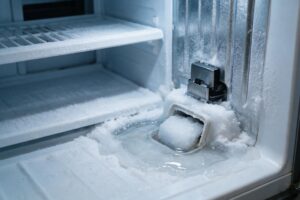
Where the puddle forms tells you most of what you need to know before opening a panel. A clogged or frozen defrost drain is the most common cause, not a cracked water line. See Refrigerator Leaking Water: Find the Source Before You Call a Pro for the full diagnostic order, or jump straight to the brand guide for your model: Whirlpool, Samsung, LG.
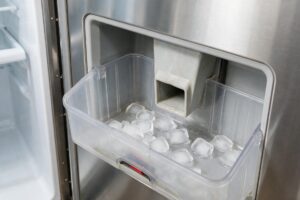
Ice Maker Not Working
An ice maker that’s gone quiet is often just switched off, whether by its own shutoff arm or an “Ice Off” setting. See Ice Maker Not Working: 8 Causes Ranked by Likelihood for the full checklist, or go straight to your brand’s reset steps: Whirlpool, GE, Samsung, LG.
Refrigerator Making Noise
A buzz, rattle, or hum usually traces back to a fan motor hitting debris or a unit that isn’t level, not a failing compressor. What the noise sounds like and when it happens narrows this down fast: Refrigerator Making Noise: 6 Causes Ranked by Likelihood.
If your refrigerator is flashing a code instead of a plain symptom, check our Whirlpool PO (power outage), Samsung 22E (fan error), and LG FF (freezer fan error) guides to see what each one actually means before you start troubleshooting.
Preventive Maintenance
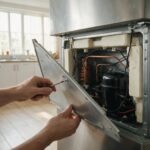
Vacuum the condenser coils twice a year, more often if you have pets, since dust buildup is the single biggest reason a refrigerator ends up working harder than it should. Wipe the door gaskets with warm soapy water and check that they spring back after being pinched; a gasket that stays creased has lost its seal. Keep the unit reasonably full so cold air has some thermal mass to hold onto, but not so packed that vents inside the cabinet get blocked. Change the water filter roughly every six months if your model has an ice maker or dispenser, since a clogged filter is behind a good share of ice maker complaints. Leave a few inches of clearance behind the unit for airflow, and check that it’s sitting level front to back and side to side.
Repair or Replace?
Most refrigerator failures are cheap: fan motors, water inlet valves, door gaskets, and defrost components all run well under $100 in parts. The exception is the sealed refrigeration system. A failed compressor or a refrigerant leak costs $200 to $450 in parts alone, plus several hours of licensed labor, since refrigerant handling requires certification in most states. On a unit past 10 to 12 years old, that repair rarely beats the cost of a new mid-range refrigerator, especially given how much more efficient newer compressors are. Each symptom page above includes a repair-or-replace section with cost ranges specific to that failure. For the full cost breakdown, see our refrigerator repair cost guide.
When to Call a Professional
Call a technician if the fridge is warm and you can hear the compressor clicking on and off repeatedly without staying running; that points to a start relay or compressor problem that needs proper diagnostic equipment. The same goes for anything involving the sealed refrigerant system, a burning smell near the back panel, or a leak that keeps coming back after you’ve checked the drain, filter, and supply line. None of the diagnostics on this site are a substitute for a professional opinion when something feels genuinely wrong.
Frequently Asked Questions
How long should a refrigerator last?
Most refrigerators last 10 to 18 years, with the compressor usually outlasting seals and fans. Chest freezers and mini fridges tend to run on the shorter end of that range.
Is it normal for the compressor to click on and off?
Yes, a compressor cycling on and off with a soft hum is normal. Loud clicking that repeats every few seconds without the fridge staying on points to a struggling start relay or compressor.
Why is there frost inside my freezer?
Frost usually means the door isn't sealing completely or is being opened often in a humid kitchen. Heavy, fast-building frost can point to a failing door gasket or a defrost system that's stuck.
Can I unplug my refrigerator to defrost it manually?
Yes, on models without auto-defrost, unplugging for 24 to 48 hours with the doors open lets built-up ice melt safely; put towels down first to catch the water.
Do I need to replace the water filter if I never use the dispenser?
Most manufacturers still recommend replacing it roughly every six months, since the filter also feeds the ice maker and can restrict water flow even if the front dispenser goes unused.
The information provided here is a diagnostic aid and does not replace the intervention of a qualified professional.