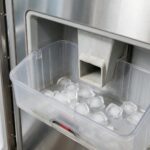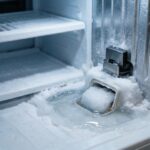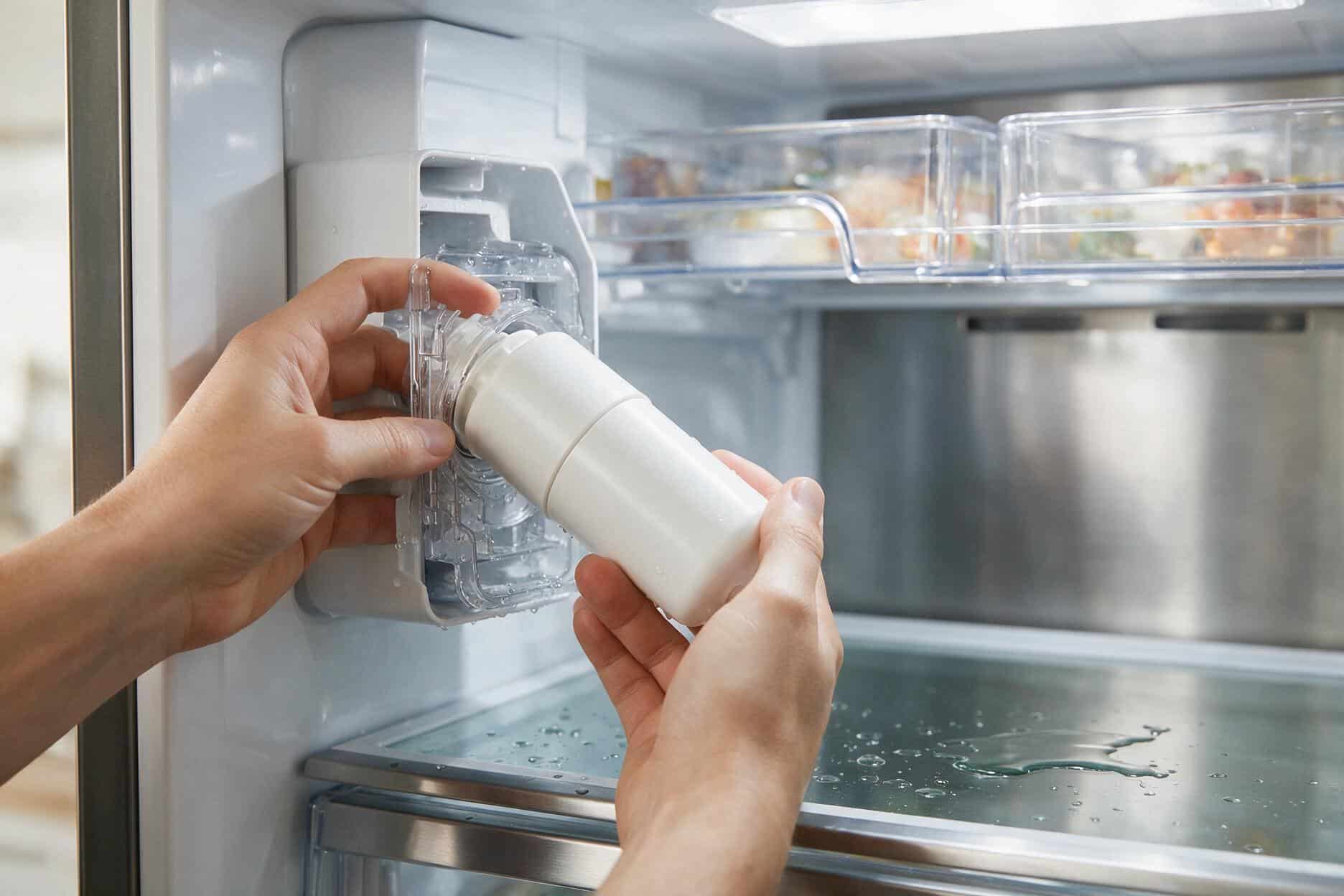
On Whirlpool refrigerators specifically, most leaks trace back to one of two things: a water filter housing that isn’t fully seated — a well-documented weak point on French Door and side-by-side models with an internal filter compartment — or a defrost drain that’s frozen or clogged with debris. Both are quick to check before assuming a bigger problem.
Before diving into Whirlpool specifics, it’s worth working through our general Refrigerator Leaking Water guide first, since it walks through every possible cause in the order you’d actually check them. What follows here narrows things down to Whirlpool alone. You’ll find the full collection in our refrigerator troubleshooting section.
Check the Water Filter Housing First
Whirlpool’s own support material flags a cracked or loose filter housing door as the single most common source of a fridge-area leak on this brand, ahead of the defrost drain, because the housing sits directly above the crisper drawers where drips are highly visible. Pull the filter out, check the O-ring for cracks or debris, and push it back in until it clicks fully into place. A housing that doesn’t seat with an audible click is very often the whole problem.
The Next Spot to Check on Whirlpool Units
If the filter housing checks out, move to the defrost drain. Whirlpool routes it behind a small access panel low in the freezer interior rather than under a full back panel like some competitors, which makes it faster to reach and flush with warm water. On dispenser models — where a fridge exterior water/ice dispenser is present — also check the water inlet valve fitting behind the unit for a slow drip; on bottom-freezer models without a dispenser, skip this step and focus on the filter housing and drain.
Where Whirlpool Units Tend to Struggle
Because the filter housing sits so close to the crisper drawers, a slow drip there is often mistaken for a produce drawer that’s overflowing or “sweating,” which delays the real fix. If you’ve already replaced the filter and the housing door still won’t click shut, the O-ring or the housing itself is likely worn and due for replacement rather than a re-seat.
Frequently Asked Questions
Puis-je réparer moi-même mon appareil ?
Les vérifications simples (filtres, joints, réglages) sont accessibles à tous, appareil débranché. Les interventions électriques relèvent d’un professionnel.
Les diagnostics proposés sont-ils garantis ?
Non. Il s’agit d’orientations basées sur les causes les plus fréquentes, jamais de certitudes.
Que faire si mon code erreur n’est pas répertorié ?
Consultez la notice de votre modèle : un même code peut varier selon la marque et l’année.
This is meant to help you narrow things down, not to replace a visit from a qualified professional.