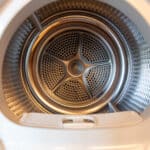
GE electric dryers use two separate heat safety devices: a thermal fuse and a high-limit thermostat, both mounted near the heating element housing. Either one tripping cuts heat while leaving the tumble motor running, which is why a no-heat GE dryer still sounds like it’s working normally.
Before diving in here, make sure you’ve gone through our full Dryer Not Heating guide, which walks through every cause in order. What’s below narrows things down to GE’s own part locations and diagnostic quirks, and lives inside our wider dryer troubleshooting hub.
GE Reset Procedure
Unplug the dryer for at least 1 minute to reset the control board. Many GE dryers, especially older mechanical-timer models, have no electronic reset at all, so a persistent no-heat fault after a power cycle almost always means a hardware issue rather than a control glitch.
Where the Heating Element and Safety Cutoffs Are
On most GE electric dryers, the heating element sits in a housing accessible from the back panel, with the thermal fuse and high-limit thermostat both mounted on or near that same housing. Because GE uses two separate cutoffs instead of one, it’s worth testing both before replacing the element itself.
Diagnostics You Might See
Most GE dryers, including many current models, don’t have a digital display or fault codes at all; a no-heat problem simply shows up as a cool cycle. A small number of higher-end GE models with electronic controls use a beep-code self-diagnostic sequence accessed through a specific button combination, which varies by model, so check your use and care guide for the exact steps.
GE’s Particular Quirks
Because GE splits the safety-cutoff function across two separate parts, a straightforward thermal fuse replacement sometimes doesn’t fix a no-heat complaint if the high-limit thermostat has also failed or tripped, so it’s worth testing both at once rather than one at a time across two separate repair attempts.
Frequently Asked Questions
Does my GE dryer have a digital display for error codes?
Most standard GE dryers don't. A no-heat fault typically shows no code at all, just a cool cycle. Some higher-end electronic models use beep-code diagnostics instead.
What's the difference between GE's thermal fuse and high-limit thermostat?
Both are heat safety cutoffs near the element housing, but they're separate parts that can fail independently. Testing both at once saves a second repair trip if only one gets replaced.
Will resetting my GE dryer fix a no-heat problem?
Rarely. Most GE no-heat faults are a blown fuse, tripped thermostat, or failed element, all hardware issues a power-cycle reset won't clear.
This content is meant to help you narrow down the cause, not to replace the judgment of a certified appliance technician.