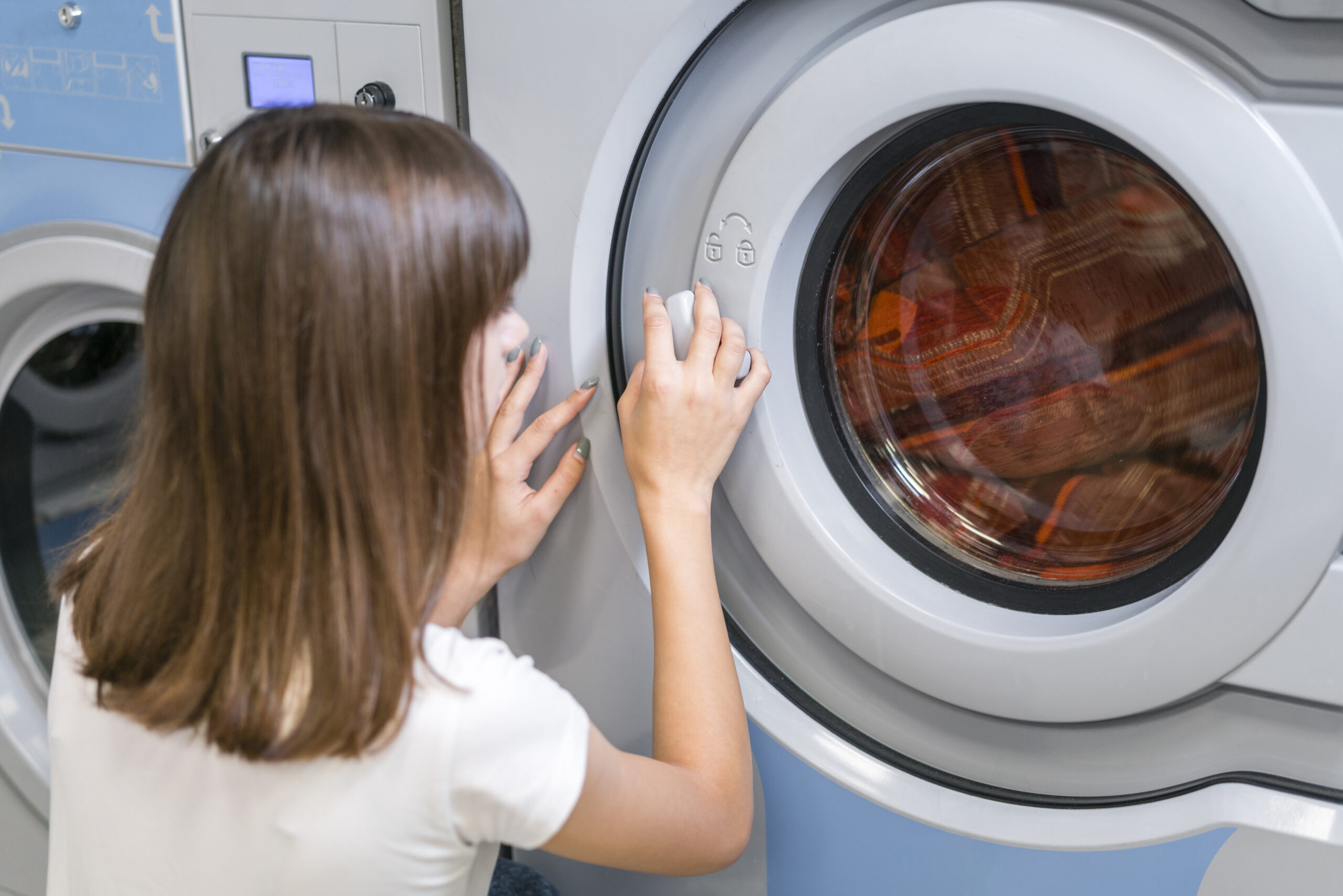
A musty or sour washing machine smell is almost never a sign of a broken part. It’s detergent residue and trapped moisture sitting somewhere air doesn’t reach, most often the door gasket fold or the dispenser drawer. Work through the checks below in order, and it’s one of the few problems here you can usually solve without spending anything.
This is part of the wider washing machine troubleshooting guide on this site. Noticing standing water left in the drum after a cycle finishes? That’s worth a look too — our not draining guide covers it, since trapped water is one of the things behind the smell.
Quick Diagnosis Table
| Cause | Likelihood | Difficulty | Typical Part Cost |
|---|---|---|---|
| Detergent or fabric softener residue in the door gasket fold | Very likely | Easy (no tools) | $0 |
| Using too much detergent, or non-HE detergent in an HE machine | Likely | Easy | $0 |
| Mold or mildew in the gasket fold or drum | Likely | Easy | $0–10 (cleaner) |
| Biofilm buildup in the dispenser drawer | Possible | Easy | $0 |
| Clogged pump filter holding stagnant water | Possible | Easy | $0 |
| Odor coming from the drain hose or standpipe | Possible | Easy | $0 |
| Blocked vent or persistent drainage fault | Rare | Moderate to professional | Varies |
Repair or Replace?
This is one of the few symptoms on this site that almost never calls for a replacement part. Every cause above is solved with cleaning, a habit change, or at most a $0–10 cleaning tablet. The only exception is a dispenser drawer or door gasket damaged enough that it can no longer be cleaned properly, which is uncommon and typically runs $20–60 in parts if it ever comes to that.
Front-load machines from any brand, including Whirlpool, GE, Samsung, LG, Maytag, Kenmore, Electrolux, and Bosch, are more prone to this than top-loaders because the door gasket fold holds standing water against a closed door. The fix is the same across brands: clean the fold and leave the door open between washes. For the full deep-clean protocol and a monthly maintenance schedule, see our step-by-step front-load washer cleaning guide.
If the dampness is coming from a torn door seal rather than just residue, you may have an actual leak. See our leaking guide to tell the difference.
Frequently Asked Questions
Why does my front-load washer smell worse than my old top-loader ever did?
Front-load doors seal tightly and the gasket fold holds a small amount of water against a surface that rarely gets full air exposure, which is the ideal environment for mildew. Leaving the door open between washes largely solves this.
Will switching to pods or liquid detergent fix the smell?
It can help if the real issue is overdosing, since pods make it harder to accidentally use too much, but the format matters less than the amount and whether it's HE-rated for your machine.
Is it safe to use bleach to clean the gasket and drum?
Diluted bleach can be used occasionally on the gasket exterior, but a washing-machine cleaner or white vinegar is gentler on rubber seals and won't degrade them the way frequent bleach use can.
How often should I run a cleaning cycle?
Once a month is enough for most households, more often if you primarily wash in cold water or use a lot of fabric softener, both of which leave more residue behind.
Can a smelly washing machine make my clothes smell too, even after washing?
Yes. If the drum or gasket has an odor, it transfers to wet laundry sitting inside it, even during a full cycle, which is usually the first sign people notice.
This is a starting point for figuring out what’s going on, not professional repair advice — bring in a qualified technician if the problem persists.