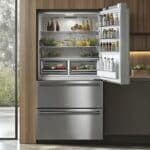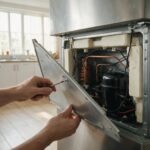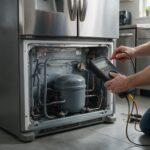
The most common cause of a refrigerator that isn’t cooling is a set of dirty condenser coils or a door seal that no longer closes tight, not a failed compressor. Work through the checks below in order. They’re ranked from most to least likely based on how these cases typically resolve.
This is one section of our complete refrigerator troubleshooting guide. If your ice maker specifically isn’t making ice but the rest of the fridge cools fine, see our separate Ice Maker Not Working guide instead.
Quick Diagnosis Table
| Cause | Likelihood | Difficulty | Typical Part Cost |
|---|---|---|---|
| Dirty or blocked condenser coils | Very likely | Easy (vacuum only) | $0 |
| Worn or dirty door seal (gasket) | Likely | Easy | $20–50 |
| Thermostat set too warm or faulty | Likely | Easy to moderate | $20–40 |
| Vents blocked by overpacked shelves | Possible | Easy | $0 |
| Evaporator fan motor not running | Possible | Moderate | $40–90 |
| Condenser fan motor not running | Possible | Moderate | $30–70 |
| Failed start relay or compressor | Rare | Professional recommended | $200–450+ |
Repair or Replace?
Every cause on this page except a failed compressor costs well under $100 in parts and less than an hour of your time, so repairing is the clear choice. A compressor replacement runs $200–$450 in parts plus several hours of licensed labor (refrigerant handling requires certification in most states); on a unit older than 10–12 years, that’s usually the point where a new refrigerator makes more financial sense than a third repair.
Whirlpool, GE, Samsung, LG, Bosch, KitchenAid, Frigidaire, and Maytag all place the condenser coils, drain, and access panels a little differently. Brand-specific “not cooling” guides are available for Whirlpool, Samsung, and LG. If your ice maker is the specific problem instead, we have brand pages for that too: Whirlpool, GE, Samsung, and LG. If only the freezer side is warm, see our Freezer Not Freezing guide; if the unit sounds unusually loud rather than warm, see Refrigerator Making Noise.
Frequently Asked Questions
How cold should my refrigerator and freezer actually be?
The fridge compartment should sit between 37 and 40°F, and the freezer at 0°F or below. Anything warmer for more than a few hours is worth investigating.
Is it normal for the compressor to run almost constantly?
Some running is normal, especially in a warm kitchen or right after the door has been open a lot. Constant running combined with a warm interior usually points to blocked airflow, not a healthy compressor working hard.
Can I just clean the condenser coils myself?
Yes. Unplug the unit, locate the coils (usually behind a bottom kick plate or on the back panel), and vacuum them with a coil brush or narrow nozzle attachment. It's one of the most effective five-minute fixes on this page.
How do I test if my door seal is actually the problem?
Close the door on a dollar bill so it's half in, half out. If you can pull it out with little resistance, the seal isn't gripping and is a likely contributor.
Why is there frost building up on the back wall inside the freezer?
That usually points to a defrost system issue or a door that doesn't seal, letting in warm humid air that refreezes. It's a different (but related) problem from the freezer never getting cold at all.
How long should I wait after moving or plugging in a new refrigerator before it's fully cold?
Give it 24 hours to reach full temperature. Don't load it with warm groceries during that window, since that slows things down further.
None of this replaces a hands-on assessment from a licensed appliance repair professional.