HomeError codes

Whirlpool Dishwasher Error Code F8E4

Marque :Brand:

Whirlpool Dishwasher Error Code F8E4

F8E4 usually shows up right after installation and points to the water supply connection or the float switch, not a defective dishwasher.

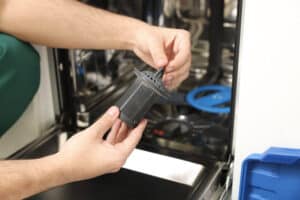
Technician inspecting the water supply connection under an open dishwasher during installation
Risk
Moderate

Meaning

F8E4 is most common on newly installed Whirlpool dishwashers. Whirlpool’s own guide checks the water supply connection and the float switch before anything else, and also flags dish soap (instead of proper dishwasher detergent) as a common trigger.

F8E4 isn’t limited to brand-new installs. It can resurface any time the dishwasher is unhooked and reconnected, for example after a countertop or sink replacement, since the same fittings get disturbed. It’s also a different fault from F8E1, which points to the heating circuit rather than the water supply or float switch, so it’s worth confirming which exact code is showing before troubleshooting.

Will running the dishwasher again clear F8E4 on its own?

Sometimes, if the float switch was only briefly triggered by a splash of water, but if the code returns on the next cycle, the water connection and the drip tray need a physical check rather than another attempted run.

Does F8E4 mean the dishwasher is unsafe to use?

Not inherently. It's a safety interlock meant to prevent overflow, so the appliance is doing what it's supposed to; the actual issue is almost always upstream of the dishwasher itself.

Can too much regular dish soap really trigger a water-related code like this?

Yes. Oversudsing can make the float switch read water where there shouldn't be any, which is why Whirlpool lists detergent type as a contributing cause alongside the plumbing checks.

Is F8E4 covered under a standard installation warranty visit?

It can be, but a technician will likely check the installation itself first, since this code is so strongly tied to setup quality rather than a failed part.

The information provided here is a diagnostic aid and does not replace the intervention of a qualified professional.

Possible causes

No cause is certain until it has been checked on the appliance.

Tools needed

First checks

Step-by-step diagnosis

  1. Press Cancel once to silence the alarm, then Cancel again to clear the code before you touch anything.
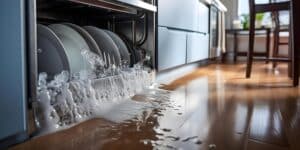
  2. Pull the dishwasher out far enough to see underneath. Look for water in the drip tray and dry it out completely, since the switch will keep firing while it sits in water.
  3. Find the water supply fitting at the inlet valve. Check the rubber washer is present and sitting flat, not pinched at an angle.
  4. Hand-tighten the fitting, then add a quarter to half turn with pliers. That extra turn is what seats the washer, and it is the step most often missed at installation.
  5. Find the float switch connector and push it in until the locking tab is visible over the back of the plug. A connector that is only half home reports a fault whether or not there is water.
  6. Open the door and look for foam left from the last cycle. Regular dish soap makes suds a dishwasher cannot handle, and the overflow lands in the same tray.
  7. Run a short cycle with the unit pulled out and a flashlight underneath, watching for the first drip rather than waiting for the code.

What not to do

When to stop

An error code varies by brand

The same code can have a different meaning depending on the brand and model. Always check your appliance's manual before acting.

Related problems

Related guides

When to call a professional

If the simple checks turned up nothing, if the repair involves electricity, gas, or the sealed refrigerant system, or if you have any doubt at all: stop there and hand the appliance over to a qualified technician.