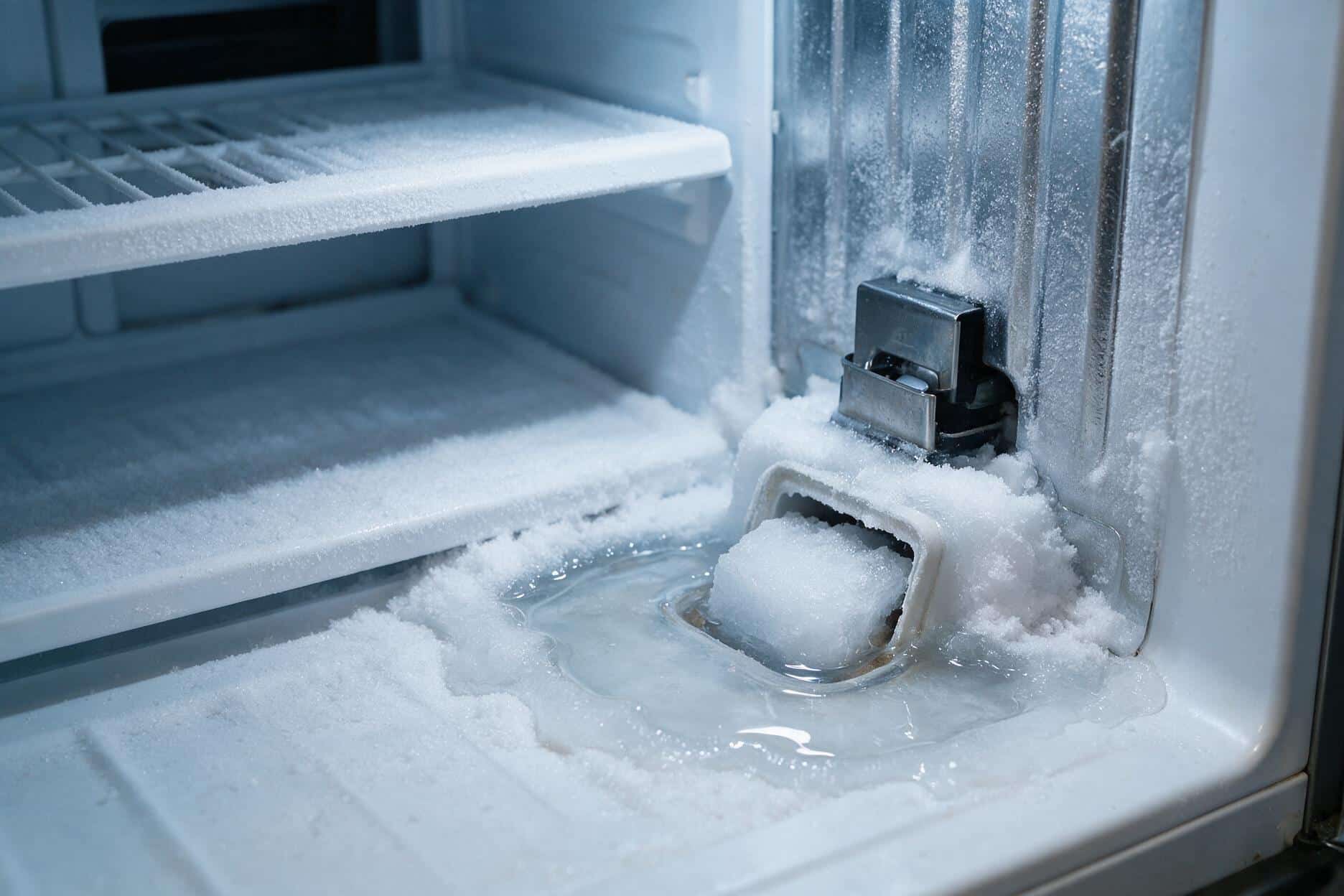
On Samsung refrigerators, the defrost drain sits close to the ice maker assembly and is well known for freezing over on French Door and 4-Door Flex models, sending water into the fresh-food compartment instead of down the drain. Ice maker overflow is the second most common cause on this brand.
This page builds on our general Refrigerator Leaking Water guide, which runs through every possible cause in the order worth checking them. From here on, everything is Samsung-specific. It’s one part of our broader refrigerator troubleshooting resource.
Check for a Frozen Defrost Drain First
Standing water under the crisper drawers or across the floor of the fresh-food compartment is the classic sign on Samsung units: the defrost drain has iced over and water is backing up instead of reaching the drain pan below the unit. Unplug the fridge, locate the drain at the back of the freezer behind the interior panel, and flush it with warm water until it runs freely. This is the single most-reported leak cause on Samsung French Door and 4-Door Flex models.
Moving On: Samsung-Specific Checks
If the drain is clear, check the ice maker bin for clumped or overflowing ice, which points to a stuck water valve or a fill tube that’s icing up and dripping into the bin. Also confirm the water filter is fully seated; an expired or loose filter on Samsung units can cause enough pressure buildup at the housing to leak. If your model has a leak sensor, check for a Samsung app or display notification, since newer units can flag this before you spot the puddle yourself.
A Common Samsung Quirk Worth Knowing
Samsung’s own support material acknowledges that internal ice buildup around the evaporator can cause the defrost drain to refreeze repeatedly even after clearing it once. If the leak comes back within a few days of flushing the drain, unplug the unit for 1 to 2 hours to let the ice fully melt before restarting, rather than repeating the flush on a partially frozen system.
Frequently Asked Questions
Puis-je réparer moi-même mon appareil ?
Les vérifications simples (filtres, joints, réglages) sont accessibles à tous, appareil débranché. Les interventions électriques relèvent d’un professionnel.
Les diagnostics proposés sont-ils garantis ?
Non. Il s’agit d’orientations basées sur les causes les plus fréquentes, jamais de certitudes.
Que faire si mon code erreur n’est pas répertorié ?
Consultez la notice de votre modèle : un même code peut varier selon la marque et l’année.
This guide is here to help you troubleshoot, not to stand in for a qualified professional’s evaluation.