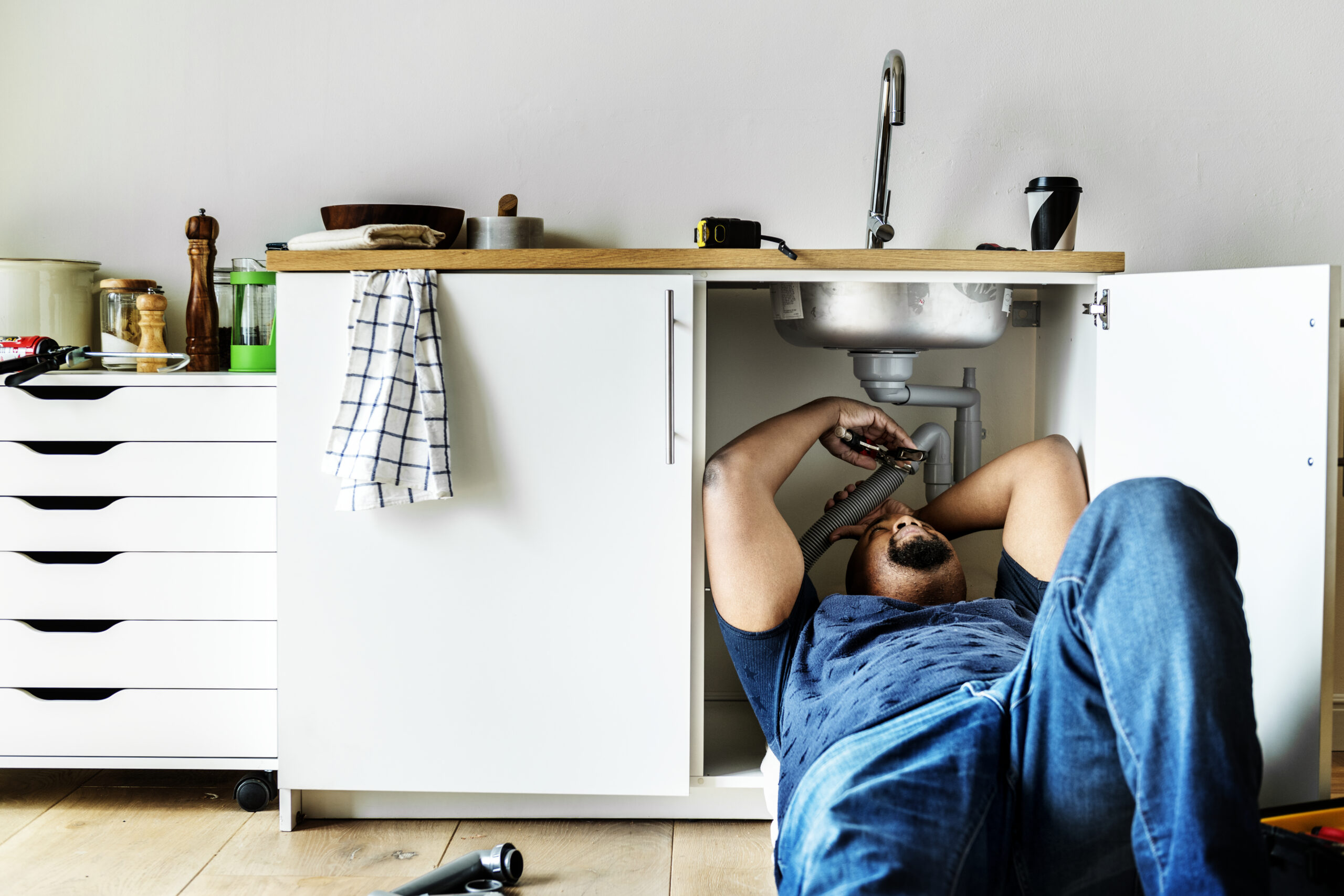
How to unclog a garbage disposal comes down to one thing you can see in ten seconds: run the unit with water in the sink and watch for a whirlpool. A whirlpool means the motor is turning and the clog sits in the drain line below it, which a plunger usually clears. No whirlpool, with a hum or a motor that sounds normal, means a jam at the flywheel, a different problem with a different fix. Either way, nothing goes into the chamber but tongs, and no chemical drain cleaner goes down it at all.
This page covers the clog: a disposal that runs but leaves water standing, drains slowly, or pushes water up into the other bowl. For a unit that hums and will not turn, go straight to garbage disposal jammed. Every other symptom is listed in the garbage disposal troubleshooting guide.
How to unclog a garbage disposal: what to try, in order
| Cause | Likelihood | Difficulty | What to do |
|---|---|---|---|
| Grease, starch, or coffee grounds packed in the trap or drain line | Very likely | Moderate | Block the other bowl, plunge with the sink a few inches full, then flush for a minute or two |
| Ground-food paste under the rubber baffle and on the chamber lip | Likely | Easy (no tools) | Power off; scrub the baffle and the upper lip with a scouring pad, nothing deeper |
| Waste ground with too little water, so it settled in the line | Likely | Easy (no tools) | Run cold water at a steady flow during and after grinding; plunge if it has already packed |
| Jam at the flywheel mistaken for a clog (hum, no whirlpool) | Possible | Moderate | Power off, hex wrench from below, then the reset button; see the jammed page |
| Clog past the trap, in the wall branch or the main drain | Possible | Professional recommended | If other fixtures back up too, or plunging and the trap change nothing, call a plumber |
| Dishwasher water backing up through the disposal inlet | Rare | Moderate | Same drain-line clog: clear it, and clamp the dishwasher hose while you plunge |
The whirlpool test: clog or jam?
InSinkErator’s support page on a clogged disposal opens with this test, and it is worth copying: “Turn the disposer on. Do you see a whirlpool in the water? If yes, you may have a clogged drain line.” The spinning flywheel pulls water down and the blockage further along keeps it from leaving, so the sink turns slowly instead of emptying. That is a plumbing problem the disposal happens to sit on top of.
No whirlpool and a hum tells a different story. The motor is energized but the flywheel cannot move, usually because a bone, a pit, or a bottle cap is wedged against the grind ring. Moen’s unjamming guide is blunt about the one rule: “Never place your hand in the disposal. Always use tongs or needle nose pliers to remove an object.” With the power disconnected, the hex socket under the unit lets you turn the flywheel; Moen has you rotate it at least two full revolutions in either direction. Moen also notes that repeated attempts to start a jammed unit can trip its internal breaker, which is why the red reset button on the lower housing often needs a press once the jam is free. The humming page sorts out a jam from a seized motor, and the reset page explains why that button keeps popping.
Plunging a disposal without making a mess
Start with what is cheapest. InSinkErator’s page has you disconnect the power, then scrub the underside of the rubber baffle and the inside of the upper lip of the grind chamber with a scouring pad. Keep that to the baffle and the lip; the chamber itself stays off limits. Then put the stopper in, fill the sink halfway with warm water, stir in about a quarter cup of baking soda, switch the unit on, and pull the stopper at the same moment so the rush of water carries the loosened paste through. If the sink empties, you are done, and the rest of this page is prevention.
If water still stands, the plunger is next, and the details matter. On a double sink, block the second bowl with a stopper first, otherwise the pressure simply comes up the other drain. The dishwasher hose enters the side of the disposal, so a plunge can push dirty water back up that hose too; clamp it or expect some to land in the dishwasher. InSinkErator’s procedure: fill the sink with about four inches of water, set the plunger over the disposal opening, “press down slowly and gently,” then pull up quickly, and repeat. The pull does the work, not the push. Roto-Rooter describes the goal the same way, pushing the clog “out of and past the disposal and kitchen sink drain,” and tells you to flush the line with plenty of water afterward. InSinkErator says to run the water and the disposal for a minute or two once the clog lets go.
Still standing? The trap is next, then the plumber
A plunger that gets nowhere after a few rounds usually means the clog is a packed plug in the P-trap, the U-shaped bend under the sink. If the trap is plastic with slip nuts, it comes off by hand with a bucket underneath. Most of the time the bend is full of a gray sludge of coffee grounds, grease, and potato peel. Clean it, reassemble hand tight, and run water to check for drips. If the trap was clear and the sink still fills, the blockage is in the wall branch, and a plumber’s drain auger is the tool for that. If the other bowl, the dishwasher, or a nearby drain backs up at the same time, you are past the kitchen entirely and into the main line.
Skip the bottle of drain cleaner at every stage. Roto-Rooter’s advice for disposals is to “never use chemical drain cleaners,” because they damage the plastic and rubber parts of the unit, and a sink full of caustic liquid is the last thing you want to be plunging. The prevention side is dull and effective: InSinkErator asks for a moderate flow of cold water during grinding and for a few seconds after, hot water only between grinding sessions, and no grease or fat down the drain at any time.
Repair or Replace?
A clog is almost never a reason to replace a disposal. The unit that produced the whirlpool is working; the drain line under it is not. Money spent on a new disposal to cure a packed trap buys a new disposal on top of the same packed trap. A unit that clogs again every few weeks is usually telling you about habits (grease, peels, pasta, too little water) or about a trap that sags and holds waste, and both are cheaper to fix than the appliance. The exception is a jam that keeps coming back on an old, small motor, which the garbage disposal repair cost guide covers.
Frequently Asked Questions
My garbage disposal is clogged but spinning. How do I unclog it?
A spinning unit with standing water is the classic drain-line clog. Block the second bowl, fill the sink a few inches, plunge with a slow push and a hard pull, then run water and the disposal for a minute or two. If that fails, open the P-trap over a bucket.
Can you put Drano or another drain cleaner in a garbage disposal?
No. Roto-Rooter's disposal advice is to never use chemical drain cleaners, because they damage the rubber and plastic parts. They also turn the sink into a splash hazard if you plunge afterward. Use the plunger and the trap instead.
How much baking soda do you use to unclog a garbage disposal?
InSinkErator's clogged-disposal page uses about a quarter cup of baking soda in half a sink of warm water, released all at once while the unit runs. It flushes loose paste; it will not move a trap packed solid, which needs the plunger.
Is it okay to pour boiling water down the garbage disposal?
Hot water belongs between grinding sessions, not during them: InSinkErator says to grind with cold water and drain hot water only between grinds. Hot water alone rarely clears a packed trap, and it softens grease that then sets further down the line.
Can I pour bleach in my garbage disposal drain?
It will not clear a clog. A clog is a physical plug of ground waste, and bleach does nothing to it. Keep bleach away from the unit for the same reason the manufacturers give for chemical cleaners: the rubber baffle and seals do not like it.
Why does water come up the other side of my sink when the disposal runs?
Both bowls share one trap and one drain line. When the disposal pushes water into a line that is blocked at or past the trap, the water takes the only open exit, which is the second bowl. Block that bowl and plunge the disposal side.
These checks separate a drain clog from a jam and from a dead unit. They are not a substitute for a licensed plumber when the blockage is past the trap.