HomeGuides

How to Deep-Clean a Smelly Front-Load Washer (Step-by-Step)

How to Deep-Clean a Smelly Front-Load Washer (Step-by-Step)

The fold under the door gasket and the detergent dispenser are where the smell actually lives. Here’s the full monthly cleaning protocol, not just a quick wipe-down.

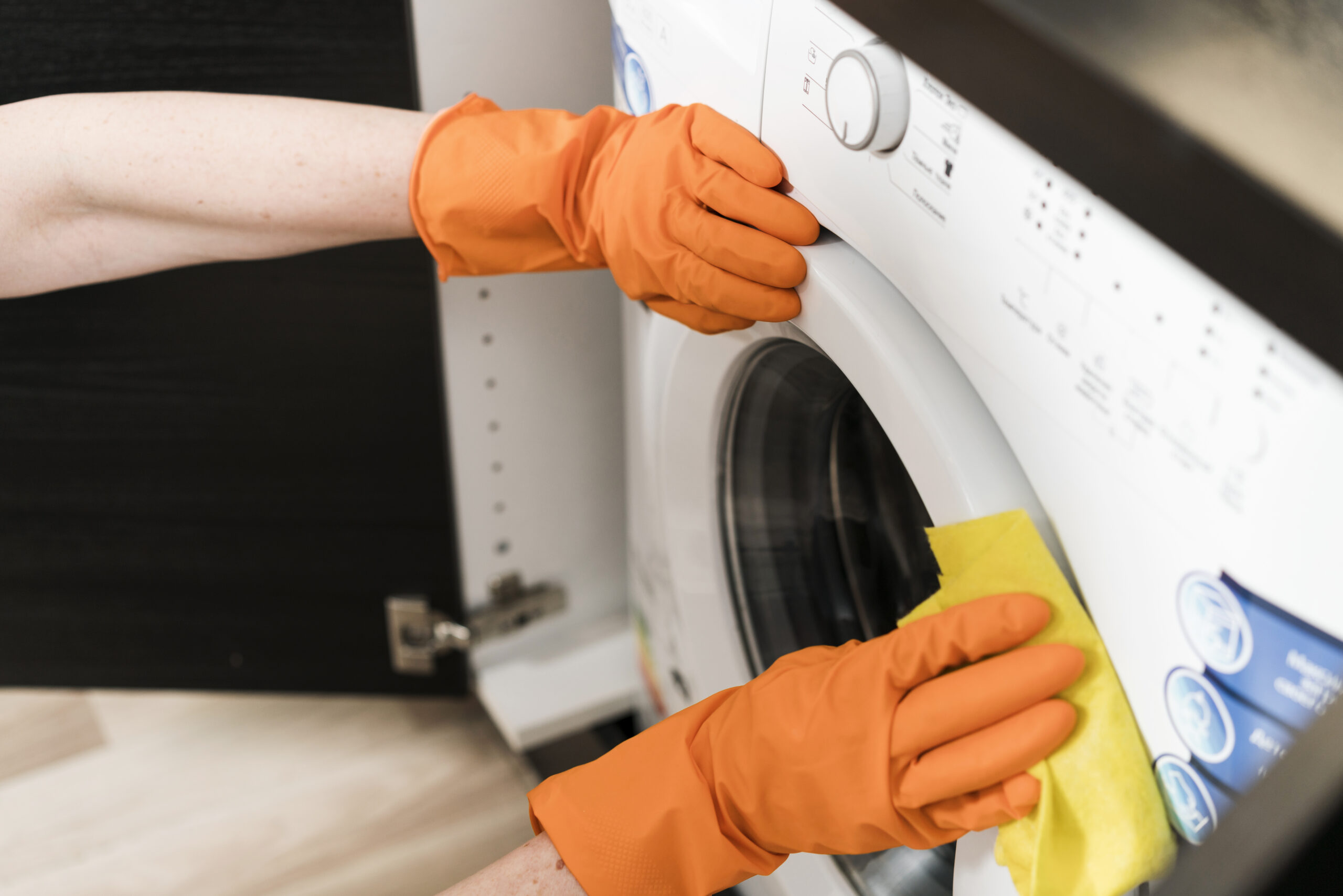
Person cleaning the door gasket of a front-load washing machine
Difficulty
Beginner

The fold under a front-load washer’s door gasket and the detergent dispenser drawer are where a musty smell actually lives. Both trap water against a surface that rarely fully dries, which is exactly what mildew needs. This is the full deep-clean protocol and the maintenance schedule that keeps the smell from coming back, not just a quick wipe-down.

If you haven’t confirmed where the smell is coming from yet, start with our Washing Machine Smells diagnostic guide. This page picks up from there with the full cleaning procedure, and it’s part of our washing machine troubleshooting hub.

Frequently Asked Questions

What's the best cleaner for a smelly front-load washer?

A dedicated washing-machine cleaner tablet works well and is formulated not to damage rubber seals, but two cups of plain white vinegar in a hot tub-clean cycle does nearly the same job for less money.

Can I use bleach on the door gasket?

Diluted bleach occasionally on the outside of the gasket is generally fine, but avoid using it every time. Frequent bleach exposure breaks down rubber faster than vinegar or a dedicated cleaner will.

How long does a tub clean cycle take?

Most run 1 to 2 hours since they use the hottest water setting and often include an extended soak. Check your specific model's cycle chart if timing matters.

Will deep-cleaning like this void my warranty?

No. Cleaning the gasket, dispenser, and running a tub-clean cycle are manufacturer-recommended maintenance, not a modification, and are usually described in your owner's manual.

The information provided here is a diagnostic aid and does not replace the intervention of a qualified professional.

Steps

  1. Fold the rubber door gasket back all the way around the drum opening; most people only wipe the visible part and never fold it back to check underneath.
  2. Wipe out standing water, hair, lint, and any grey or black residue in the fold with a damp microfiber cloth.
  3. For mildew already growing in the fold, scrub gently with an old toothbrush dipped in white vinegar or a diluted washing-machine cleaner, then dry the fold and leave the door open for a few hours.
  4. Run your machine's dedicated Tub Clean or Affresh/Clean Washer cycle empty, using a washing-machine cleaner tablet or two cups of white vinegar; if your model has no dedicated cycle, run the longest, hottest regular cycle empty instead.
  5. Pull the detergent and fabric softener dispenser drawer all the way out (most release with a firm pull or a small catch button) and rinse it under hot water, scrubbing with an old toothbrush.
  6. Clean the cavity the drawer sits in with a cotton swab; this spot is where people forget to check entirely, and residue collects there even when the drawer itself looks clean.
  7. Let the dispenser drawer air-dry fully before sliding it back in, and leave the washer door open between loads going forward.

Warnings

  • Don't mix bleach with vinegar or with any ammonia-based cleaner. Combining them produces toxic fumes.
  • Avoid abrasive scouring pads on the rubber gasket. They can nick the seal and cause a genuine leak later.
  • If mildew keeps returning within a week or two of cleaning despite leaving the door open, that points to a drainage or ventilation issue worth investigating rather than a cleaning problem, see our Washing Machine Smells guide.

Maintenance tips

  • Leaving the door and dispenser drawer open between washes prevents most of this buildup from forming in the first place.
  • A monthly tub-clean cycle is manufacturer-recommended maintenance on most machines, not an extra chore. Check your owner's manual for the exact interval.
  • If the smell is new and strong rather than a slow buildup, double-check you haven't started using more detergent or fabric softener than the machine calls for.

Dans ce guide

In this guide

  • White vinegar or a washing-machine cleaner tablet
  • Old toothbrush or small soft brush
  • Microfiber cloth
  • Cotton swabs
Sam Radford — DiagnosFix

Sam Radford — DiagnosFix

Technical reviewer

Last verified: 2026-07-18

Before you start

Unplug the appliance, shut off the water supply if relevant, and stop immediately if you smell burning. If in doubt, call a qualified professional.