Most oven problems trace back to one of a few parts: the igniter on gas models, the bake element on electric models, or a temperature sensor that’s drifted out of calibration. This guide sorts common failures by symptom, so you can jump straight to the section that matches what your oven is actually doing instead of guessing from a list of generic tips.
Every symptom page below ranks causes by how often they turn out to be the real problem, includes at least one test you can run without buying anything, and tells you plainly when a fix is a quick job versus when it’s time to call a professional. Where a fix genuinely varies by manufacturer, we say so instead of pretending one procedure covers every brand.
Oven Not Heating
On gas ovens, a weak or failed igniter is by far the most common cause. On electric ovens, it’s usually a burned-out bake element. See Oven Not Heating: 6 Causes Ranked by Likelihood for the full diagnostic order, or check the brand guide for your model: Whirlpool, GE, Samsung.
Oven Heating Unevenly
Food browning faster on one side or near the back is usually a spacing problem, not a broken part: overcrowded racks and foil lining the oven floor both block airflow. See Oven Heating Unevenly: 5 Causes Ranked by Likelihood for the full diagnostic order.
Oven Runs Hot or Cold
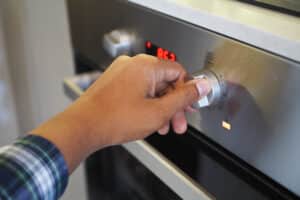
Most ovens that run hot or cold just need calibrating through the control panel, no parts required. Full breakdown, including how to tell real drift from normal element cycling: Oven Runs Hot or Cold: How to Tell and Fix a Temperature That’s Off.
Oven Door Won’t Unlock
A door that stays locked after self-clean is almost always the safety lock waiting for the oven to cool, not a failure. Details on the cooldown window and what to try next: Oven Door Won’t Unlock After Self-Clean? Here’s What to Try.
If your oven is showing an error code instead of a plain symptom, check our Whirlpool F9 and GE F9 guides (both door lock circuit faults) or Samsung C-24 (temperature rising too fast).
Preventive Maintenance
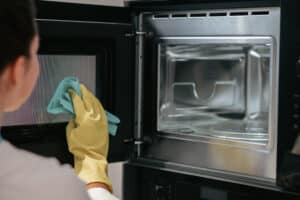
Wipe up spills before they carbonize onto the oven floor or heating elements; baked-on residue drives up energy use and can cause smoke on the next self-clean cycle. Check the door gasket for cracks or gaps twice a year, since a worn gasket lets heat escape and makes the oven work harder to hold temperature. If your model has a visible bake element, look it over for blistering or a break in the coil, both early signs it’s about to fail. Have the oven’s temperature checked with an independent oven thermometer once a year; built-in sensors can drift 25 to 50 degrees off without tripping any error.
Repair or Replace?
Igniters, bake elements, and temperature sensors are all cheap parts and quick jobs, so repairing almost always wins on an oven under about 10 years old. A control board is the exception: at $100 to $250 in parts plus labor, replacing the board on an older range is often the point where a new oven makes more sense, particularly since board failures tend to recur on units that have already had other electronic issues. For the full cost breakdown, see our oven repair cost guide.
When to Call a Professional
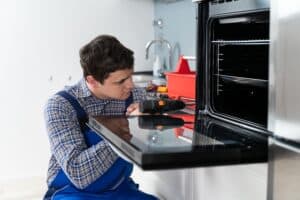
Call a technician for anything involving the gas line itself, a persistent gas smell, or work on a control board or wiring beyond unplugging the unit. The same goes if you see scorch marks near the electronics or a self-clean cycle triggers a smoke alarm or a burning smell that doesn’t clear once the cycle ends. None of the diagnostics on this site are a substitute for a professional opinion when something feels genuinely wrong.
Frequently Asked Questions
How long should an oven last?
Most ovens last 10 to 15 years. Gas ovens tend to need a few igniter replacements over that span; electric ovens more commonly need a bake or broil element replaced.
Is it normal for a gas oven to smell like gas briefly when it starts?
A faint smell for a few seconds while the igniter lights the burner is normal. A smell that lingers or gets stronger means you should turn off the oven, leave the gas supply alone, and call your gas utility or a technician.
Why does my oven take longer to preheat than it used to?
A weakening igniter on gas models or a bake element that's lost output on electric models often shows up first as slower preheating, before it fails completely, so it's usually an early warning sign rather than a separate problem.
Can I keep using the oven if a heating element is glowing unevenly?
No. An element that glows in patches or has a visible break is failing and should be replaced before further use, since it can pose a shock or fire risk.
Does Sabbath mode disable all the oven's normal functions?
Yes, Sabbath or Demo mode overrides the usual controls and can make the oven appear completely unresponsive; check your model's manual for the button combination to turn it off if you didn't set it intentionally.
The information provided here is a diagnostic aid and does not replace the intervention of a qualified professional.