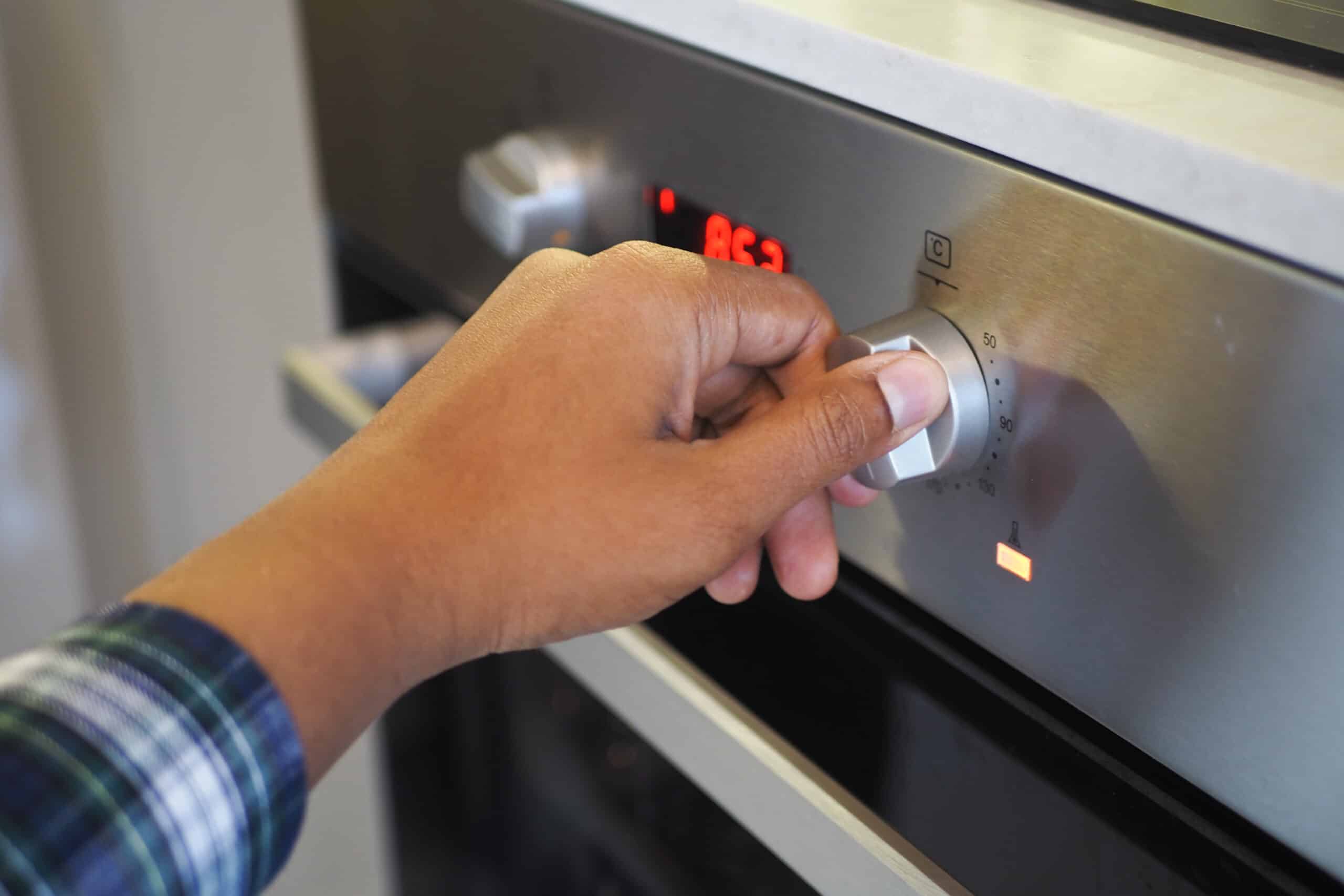
Most ovens that run noticeably hot or cold just need calibrating: manufacturers build in an adjustment of up to 35°F in either direction through the control panel, no parts required. Before touching any part, rule out normal element cycling, which can make an oven look like it’s running hot to an oven thermometer even when it isn’t.
See the full oven troubleshooting guide if this isn’t quite the symptom you’re dealing with.
Quick Diagnosis Table
| Cause | Likelihood | Difficulty | Typical Part Cost |
|---|---|---|---|
| Oven simply needs calibrating | Very likely | Easy (no tools) | $0 |
| Normal element cycling misread as running hot | Likely | Easy to confirm | $0 |
| Drifted or faulty temperature sensor | Possible | Moderate | $15–35 |
| Door not sealing, letting heat escape | Possible | Easy to moderate | $20–40 |
| Weak igniter or heating element (slow to reach temperature) | Possible | Moderate | $15–60 |
| Defective control board | Rare | Professional recommended | $100–250+ |
Repair or Replace?
Calibration costs nothing and fixes the majority of these complaints in a few minutes through the control panel; check your owner’s manual for the exact button sequence, since it varies by model. A sensor or door gasket replacement still runs under $40 in parts. A control board is the only cause here that changes the math: at $100 to $250 plus labor, it’s worth weighing against a new range on an oven past 10 to 12 years old.
Frequently Asked Questions
How do I calibrate my oven's temperature?
Most models let you adjust the temperature up to 35 degrees hotter or cooler through the control panel or a settings/options menu; the exact button sequence is in your owner's manual, since it varies by brand and model.
Why does my oven thermometer show big swings even though the oven seems fine?
Heating elements cycle on and off to hold an average temperature, and most thermometers react slowly, so they can show a swing of 25 to 50 degrees during normal cycling. Manufacturers specifically advise against judging accuracy from a single thermometer reading during a cycle.
How much can I trust an oven thermometer versus the built-in sensor?
A separate oven thermometer is useful for spotting a real, consistent offset over several readings, but a single reading can be misleading due to cycling. Average several readings at the same point in the cycle before assuming the built-in sensor is wrong.
Can a bad door seal really make an oven run cold?
Yes. A gasket that's cracked or has lost its spring lets heat escape continuously, so the oven cycles on more often and can undercook food near the door even if the sensor itself is accurate.
Is it worth replacing the temperature sensor myself?
Testing it with a multimeter for resistance at room temperature (it should read roughly 1,080 ohms, though this varies by model) is a reasonable DIY check. If it's out of range, the part itself is inexpensive and usually accessible without removing major panels.
When should I stop troubleshooting and call a technician?
If calibration doesn't help, the door gasket is intact, and the sensor tests normal, a control board issue is likely and is best confirmed by a technician before you pay for a part that might not be the actual cause.
This is meant to help you pinpoint the issue, not to replace the judgment of a trained repair technician.