HomeError codes

Whirlpool Washer Error Code F8 E1 or LO FL (Low Water Flow)

Marque :Brand:

Whirlpool Washer Error Code F8 E1 or LO FL (Low Water Flow)

F8 E1 or LO FL means the washer is sensing low water flow, usually a household supply valve that isn’t fully open or a kinked fill hose.

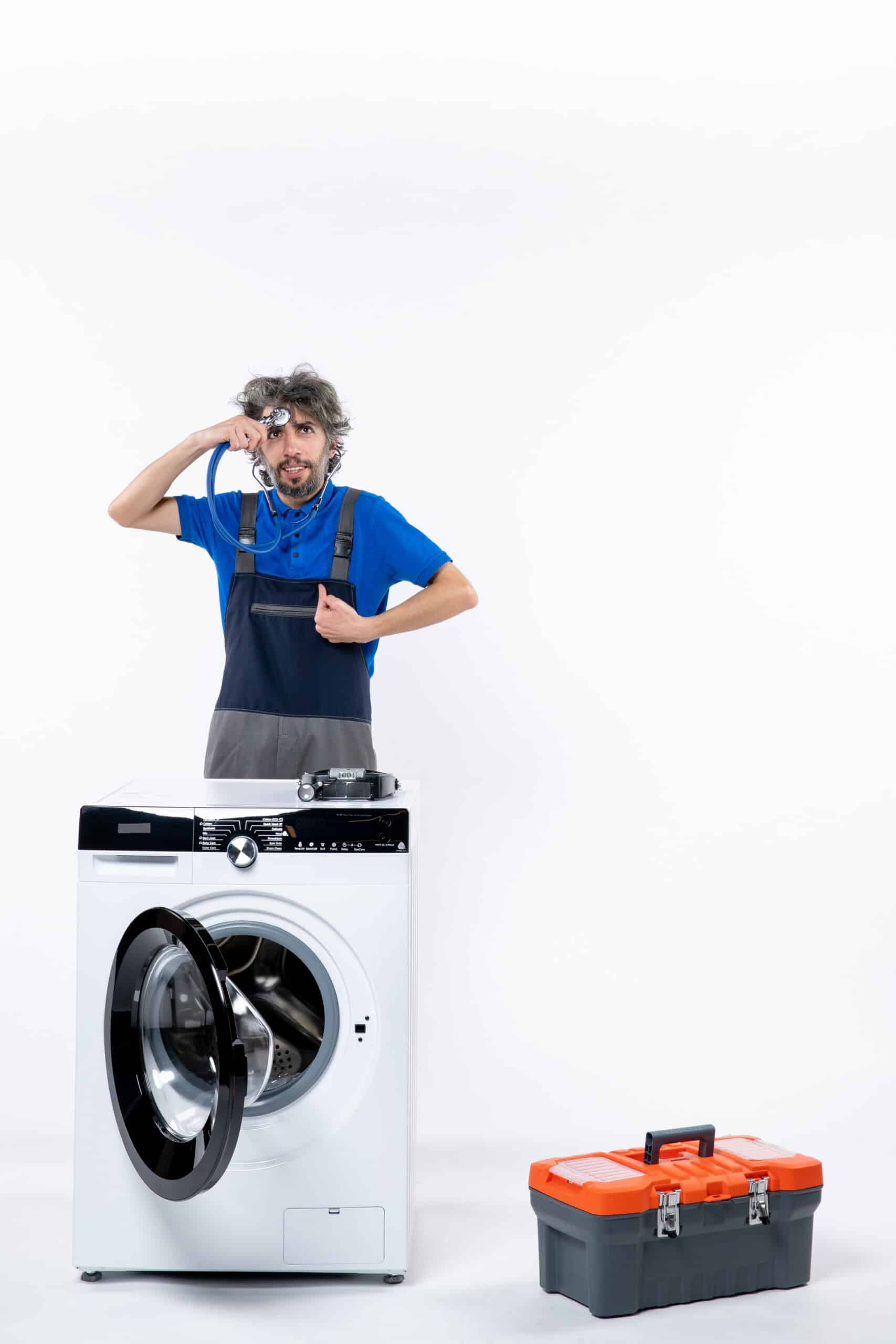
Repairman with a stethoscope standing next to a washing machine, illustrating Whirlpool washer error code F8 E1 low water flow
Risk
Low

Meaning

F8 E1, also shown as LO FL on some models, appears when the washer senses that water isn’t flowing in fast enough. Whirlpool’s troubleshooting starts with the household water supply itself, not the washer’s internal parts.

Because this fault is about flow rate rather than total water reaching the tub, a valve that’s only partially open can trigger it even though the washer eventually fills. It’s also common after a water heater repair or a renovation, when a supply valve gets closed and only reopened partway afterward.

Can a clogged inlet filter screen cause F8 E1 even with the valves fully open?

Yes. Each fill hose has a small mesh screen where it connects to the washer, and sediment buildup there is a common cause once the valves and hoses check out fine.

Does F8 E1 mean the water inlet valve is broken?

Not necessarily. It's more often a supply-side restriction; the inlet valve itself is usually the last thing checked once flow at the wall and the hose screens are confirmed good.

Is LO FL the same fault as F8 E1?

Yes, they're the same underlying low-flow condition, just displayed differently depending on the control panel generation.

Why does this matter for a hot-only or cold-only wash?

Some cycles blend both valves together, so a restriction on just one side, like a partially closed hot water valve, can still trigger the code even on a cold-only setting.

The information provided here is a diagnostic aid and does not replace the intervention of a qualified professional.
Possible causes

No cause is certain until it has been checked on the appliance.

Tools needed

First checks

Step-by-step diagnosis

  1. Reach behind the washer and open both taps fully. Half open passes enough water to fill a sink but not enough to satisfy the flow sensor.
  2. Run both hoses through your hand along their whole length, feeling for a kink where the machine was pushed back against the wall.
  3. Check whether flood-safe hoses are fitted. They have a bulge at the tap end and they latch shut after a pressure surge, then pass only a trickle. A latched hose looks completely normal from outside.
  4. To reset a flood-safe hose, close the tap, disconnect the hose at the washer to release pressure, then reconnect and open the tap slowly. Opening it fast trips it again straight away.
  5. Close both taps, put a bucket down, and disconnect the hoses at the machine. Pull the mesh screens from the inlet ports and brush the sediment out.
  6. Reconnect, open the taps slowly, and run a rinse to watch the fill.

What not to do

When to stop

An error code varies by brand

The same code can have a different meaning depending on the brand and model. Always check your appliance's manual before acting.

Related problems

Related guides

When to call a professional

If the simple checks turned up nothing, if the repair involves electricity, gas, or the sealed refrigerant system, or if you have any doubt at all: stop there and hand the appliance over to a qualified technician.