A Keurig that powers on but won’t brew is almost always an air lock in the water lines, a water reservoir that isn’t seated correctly, or a clogged entrance or exit needle. All three take a few minutes to check before assuming the pump has failed.
Here we’re focused on a machine that powers on and seems ready to go, but gives you little or nothing when you actually start a brew: an empty cup, a suspiciously short pour, or a cycle that runs without dispensing anything. Machine has zero power? That’s a different page: Keurig Won’t Turn On or Not Working. Brewing fine but stuck with a descale light? See Keurig Descale Light Won’t Turn Off. Everything else lives in our coffee machine guide.
Quick Diagnosis Table
| Cause | Likelihood | Difficulty | Typical Cost |
|---|---|---|---|
| Air lock in the water lines (common after storage, moving, or a refill) | Very likely | Easy (a few minutes) | $0 |
| Water reservoir not seated correctly, or too low | Very likely | Easy (no tools) | $0 |
| Entrance or exit needle clogged with coffee grounds or cocoa mix | Likely | Easy (caution: sharp) | $0 |
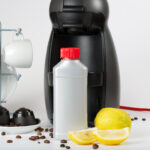
| Scale buildup narrowing the internal water path | Possible | Easy (30–45 min) | $8–15 (descaler) |
| Water filter cartridge clogged (if installed) | Possible | Easy (no tools) | $8–15 (replacement filter) |
| Water pump failed | Rare | Not user-repairable | Replace unit ($80–200) |
Repair or Replace?
Clearing an air lock, reseating the reservoir, cleaning the needle, and descaling cost nothing and resolve the vast majority of cases. Keurig machines are sealed units without a real parts catalog, so if the pump itself has failed, there’s no official replacement part sold to consumers. At that point you’re weighing a new machine, typically $80 to $200 depending on the model, against contacting Keurig support directly. Machines still under warranty (usually one year) should go back to the manufacturer rather than being opened up.
Frequently Asked Questions
Why does my Keurig make noise but no coffee comes out?
This almost always means an air lock or a clogged needle: the pump is running, but water can't get through a blocked line or needle. Priming the machine and cleaning the needle usually clears it.
How do I prime a Keurig that won't dispense water?
Remove the water reservoir, fill it completely with fresh water, and reseat it firmly until it clicks. Run a water-only brew (no pod) a few times in a row; this pushes trapped air out of the lines. Repeat if the first attempt doesn't restore flow.
Can a clogged needle really stop the brewer completely?
Yes, if it's fully blocked by coffee grounds or cocoa mix. Keurig's own support guidance covers cleaning the entrance and exit needles; use caution, since they're sharp, and unplug the machine first.
Does descaling help if my Keurig won't brew at all?
Yes. Scale narrows the internal water path over time and can turn a partial blockage into a full stop, especially combined with a dirty needle or an air lock. Keurig recommends descaling every 3 to 6 months.
Is a short cup the same problem as no coffee at all?
Related, yes. A short cup is usually an earlier stage of the same causes, most often a clogged needle, a low or misaligned reservoir, or scale buildup. The same checks apply before the problem gets worse.
When should I stop troubleshooting and contact Keurig?
If a water-only brew still produces no water after reseating the reservoir, clearing an air lock, and cleaning the needle, the pump has likely failed. Contact Keurig support rather than repeating the same cycle.
Nothing here replaces a qualified technician; treat it as a starting point for your own diagnosis.